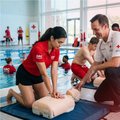





Over 12,000 students have earned certifications through Wicked Safety Training, and we have taught more than 2,500 classes since 2019. But a certification card is only part of the goal. The real objective is helping you perform correctly and confidently when someone's life may depend on your next decision.
Many people who take a CPR class have never performed chest compressions on a real person. Understandably, they may leave the classroom wondering: Was I pressing hard enough? Was I moving quickly enough? Did I allow the chest to fully recoil?
At Wicked Safety Training, you do not have to rely on guesswork.
Our classes use state-of-the-art training technology, including Innosonian Brayden Advanced and Brayden Pro CPR manikins, to provide immediate, objective feedback while you practice. You can see the effect of your compressions, correct your technique, and build the muscle memory needed to respond during a real emergency.
Why does CPR training technology matter?
CPR is not simply a series of steps to memorize. High-quality CPR depends on precise physical performance.
For adult CPR, effective compressions generally require:
- A rate of at least 100 compressions per minute
- A depth of at least 5 centimeters, or approximately 2 inches
- Complete chest recoil after every compression
- Correct hand placement
- Appropriate ventilation when rescue breaths are part of the protocol
Those details directly affect whether compressions can circulate blood to vital organs. Yet a traditional manikin may not tell you exactly how well you are performing.
That is where Brayden technology changes the learning experience. Instead of waiting for an instructor to notice every issue: or completing a skills checklist without understanding your performance: you receive feedback as you practice.
The result is a more active, measurable, and meaningful learning process.
What makes the Brayden manikin different?
The Brayden Adult Advanced manikin uses three interrelated sets of LED lights built directly into the manikin. These lights help students visualize what is happening during CPR: particularly how compressions influence simulated blood circulation from the heart toward the brain.
As Innosonian explains, the Brayden system is designed to help students understand both the "how" and "why" of CPR.
1. Blood circulation lights show the effect of your compressions
The circulation lights represent blood moving from the heart toward the brain.
As your compression depth and rate improve, the simulated blood flow becomes more effective. This gives you an intuitive visual reminder that CPR is not about pushing randomly or simply moving quickly. It is about producing compressions strong and consistent enough to circulate blood.
You can literally watch your technique make a difference.
2. Chest compression lights respond to compression depth
The chest compression indicators represent the volume of blood being circulated by each compression. They respond to how deeply you press.
The lights only fully illuminate when compressions reach approximately 5 centimeters, or 2 inches, for an adult manikin. If you are too shallow, the display provides an immediate signal that you need to adjust.
That feedback helps students learn what effective compression depth feels like: not just what it looks like in a textbook.
3. The CPR quality light confirms effective technique
The CPR quality light, located near the manikin's head, only fully illuminates when the essential compression criteria are being met:
- The rate is at least 100 compressions per minute
- The depth is at least 5 centimeters
- The chest is allowed to fully recoil
This is powerful because it combines several important skills into one clear visual outcome. You are not merely checking off "performed compressions." You are learning to perform compressions that meet the standard needed for effective CPR.
As Professor Douglas Chamberlain, an expert quoted by Innosonian, states:
"The light effects to show likely sufficient coronary and cerebral flows is novel and will be an effective stimulus for improving the quality of compressions."
The display gives students a reason to keep practicing until the technique is right. That builds confidence without creating panic.
What additional feedback does Brayden Pro provide?
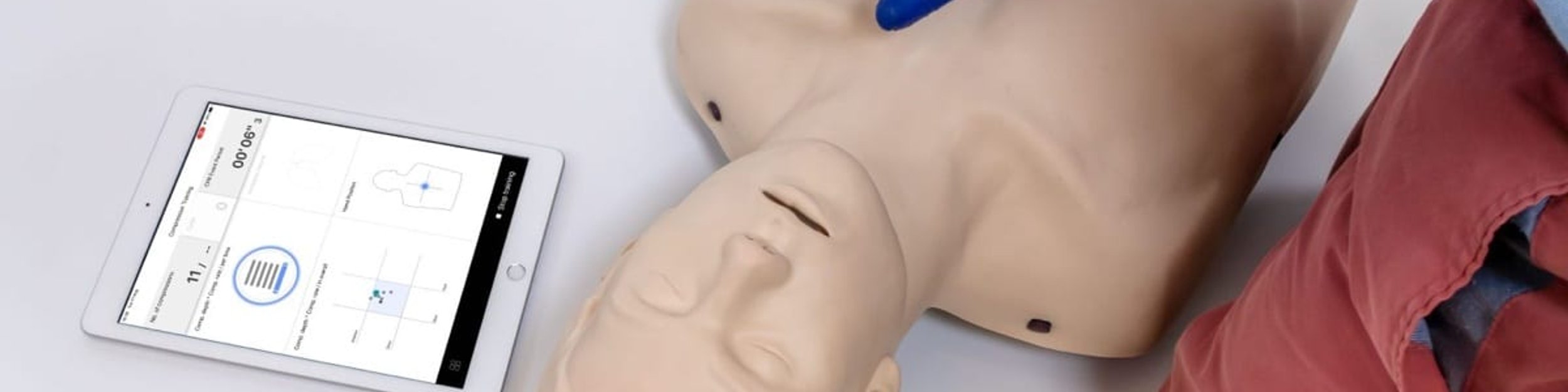
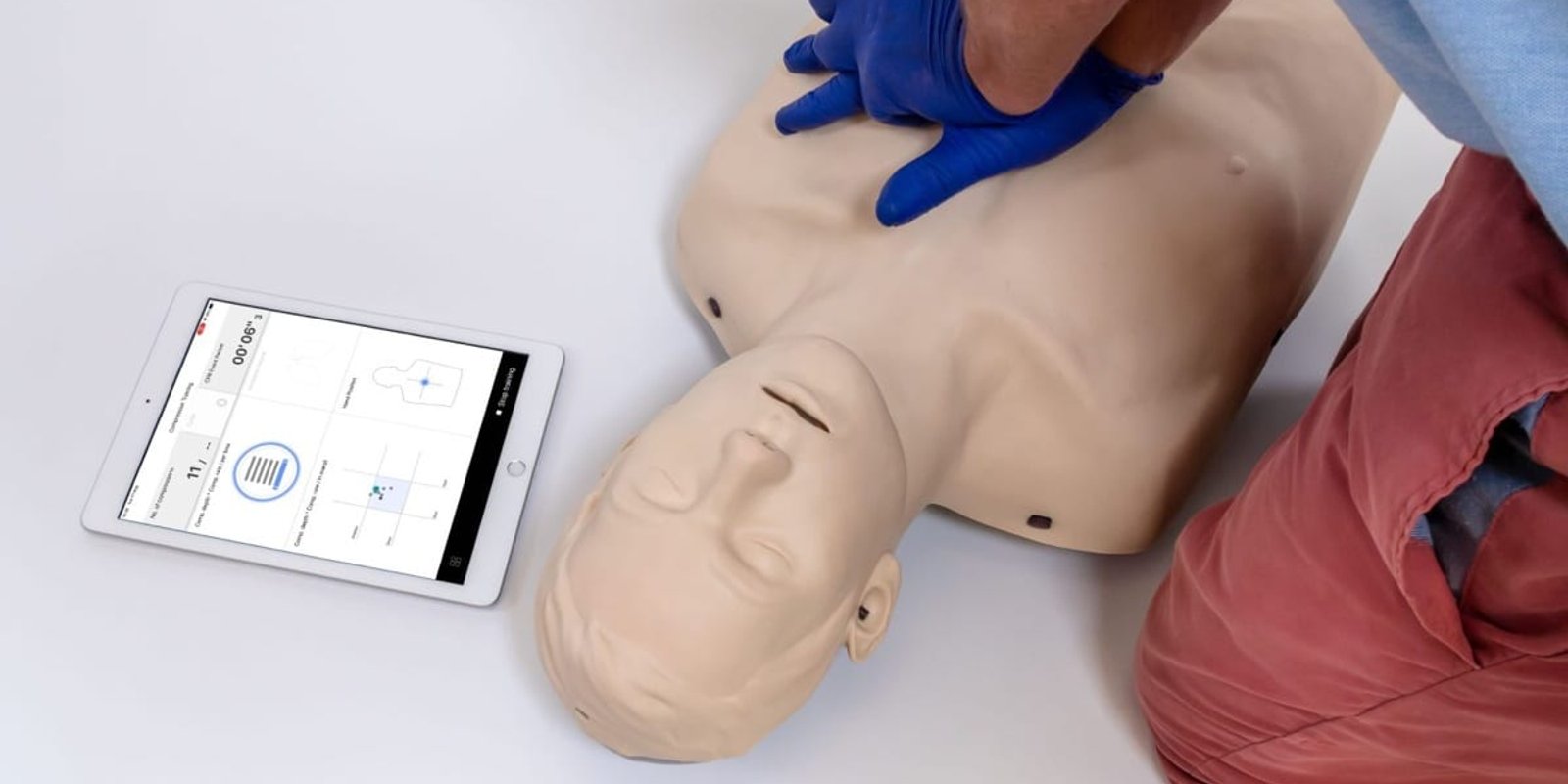
For students and organizations that need more detailed performance information, the Brayden Adult Pro adds app-based feedback and quantitative data.
The Pro model can provide real-time information about:
- Compression depth
- Compression rate
- Chest recoil
- Hand position
- Ventilation volume
- Overall CPR performance
The data can also be reviewed after practice, allowing instructors and students to identify patterns. Were compressions becoming too shallow as fatigue set in? Was hand position shifting? Were ventilations too forceful or too limited?
Those are useful questions during a training session because they can be addressed before a student faces a real emergency.
Kevin Mackie, Consultant in Medical Education, describes the value of this approach:
"The professional standard of expected performance."
At Wicked, technology does not replace the instructor. It gives the instructor better information and gives the student a clearer path to improvement.
How does this technology build real confidence?
Confidence should come from competence: not from simply completing a course.
During a Wicked Safety Training class, you can repeat a skill, observe the feedback, make an adjustment, and try again. That cycle turns abstract instructions into physical understanding.
A typical practice sequence may look like this:
- The instructor demonstrates the correct hand position, rate, depth, and recoil.
- You perform compressions on the Brayden manikin.
- The LED indicators show how your technique is affecting simulated circulation.
- The instructor explains what to change.
- You repeat the skill until your performance becomes more consistent.
- On Pro models, you can review quantitative results and target specific areas for improvement.
This is how muscle memory develops.
You may still feel nervous in a real emergency: and that is normal: but you will have practiced the physical skills enough to act instead of freezing. The power to save a life is literally in your hands.
Why choose Wicked for hands-on safety training?
Advanced technology is only valuable when it is paired with excellent instruction. Wicked Safety Training combines both.
We offer hands-on learning in a professional, supportive environment at our training center in Woburn, Massachusetts, conveniently serving learners from:
- Burlington
- Winchester
- Stoneham
- Reading
- Lexington
- Medford
- Malden
- Melrose
- Everett
- Cambridge
- Chelsea
- Boston and the broader Greater Boston area
Our certified instructors provide personal guidance throughout the class. They explain the reasoning behind each skill, answer questions without judgment, and create an inclusive environment where students can practice until they feel prepared.
Wicked has been recognized as New England's top training provider for three years running. Since 2019, we have taught more than 2,500 classes and certified over 12,000 students: including healthcare professionals, workplace teams, teachers, caregivers, lifeguards, parents, and community members.
Need training at your location?
You do not always have to travel to Woburn.
Our instructors can bring training to your business, healthcare facility, school, community center, or other organization. On-site training is available across New England and can be arranged for teams that need a convenient, private, and consistent learning experience.
On-site training may be a practical choice for:
- Hospitals, clinics, and medical offices
- Childcare centers and schools
- Restaurants and hospitality businesses
- Fitness centers and athletic programs
- Municipal departments and community organizations
- Corporate safety teams
- Aquatic facilities and summer camps
For organizations comparing health and safety services in Massachusetts, on-site instruction can reduce scheduling challenges while helping your entire team train together.
Which courses are available at Wicked Safety Training?
Our course catalog supports both personal preparedness and professional requirements. Depending on your role and employer's policies, we offer:
- CPR, First Aid, and AED certification
- Basic Life Support (BLS)
- Advanced Cardiovascular Life Support (ACLS)
- Pediatric Advanced Life Support (PALS)
- Lifeguarding
- Water Safety
- Chokesaver training
- Specialty safety courses
We offer certification options through the American Heart Association, American Red Cross, and ASHI, including in-person and blended learning formats. If you are unsure which provider your employer accepts, check with your organization before registering.
You can explore our CPR, First Aid, and AED courses, review BLS and advanced healthcare training, or browse our specialty classes.
Ready to train with better feedback?
Whether you need CPR training in Boston, CPR training in MA, Massachusetts CPR certification, or safety training anywhere across New England, Wicked Safety Training gives you more than a classroom presentation.
You get:
- State-of-the-art Brayden Advanced and Pro manikins
- Real-time visual feedback on compression quality
- Optional app-based performance data
- Certified, supportive instructors
- Hands-on practice in a professional environment
- In-person and on-site training options
- A wide range of recognized certification courses
Do not wait until an emergency exposes what you do not know. Register for an upcoming class or contact Wicked Safety Training to arrange training for your organization.
Practice with purpose. Train with confidence. Choose Wicked Safety Training.