




BLS, ACLS, PALS & ASLS for Healthcare Providers
Basic Life Support is the credential your employer checks and the skill set your patients depend on. Wicked Safety Training teaches BLS the way it is actually used on a code, on a unit floor, in a dental operatory and in the back of an ambulance — with real compressions, real ventilation practice and real team dynamics. Certification is the paperwork. Competence is the point.
Register for a ClassCourse at a Glance
- Certification: American Red Cross BLS or AHA BLS for Healthcare Providers, plus AHA ACLS, PALS and ASLS
- Where: Public classes at 546 Main Street in Woburn, or on-site anywhere in New England
- Prices and dates: Prices change regularly, so check the registration page for current prices and class dates
Both Agencies, One Training Provider
Most providers can only offer you one curriculum. We hold three credentials, so you get a choice:
- American Red Cross Basic Life Support — initial certification and review courses, offered as a Red Cross Premier Licensed Training Provider
- AHA BLS for Healthcare Providers — initial certification and renewal, offered as an American Heart Association Training Site
- HSI curricula for organizations that standardize on that pathway as an HSI Training Center
That matters more than it sounds. Hospitals, dental groups and nursing programs rarely all accept the same card. When a department requires AHA and a per-diem role requires Red Cross, you do not need to find two vendors, two schedules and two invoices. Tell us which card your employer or clinical placement requires and we will run that course.
Who BLS Is For
This is a healthcare-provider level course, and the room is usually a mix of people who already work in clinical settings and people about to start.
- Nurses, nurse practitioners and nursing students entering clinical rotations
- Dental students, hygienists, assistants and full practice teams renewing together
- EMTs, paramedics and EMS organizations certifying or renewing crews
- Allied-health students who need a card before a placement start date
- Clinic, urgent-care, surgical-center and outpatient teams under a compliance deadline
If you are unsure whether you need BLS or a lay-responder CPR course, call us at (617) 820-9862. It takes about a minute to sort out, and it is a better use of your time than sitting through the wrong class.
What a Class Actually Looks Like
Our instructors are working RNs, EMTs and paramedics. They are not reading a script — they are teaching from shifts they worked recently, and they will tell you where the textbook sequence meets a real room with real furniture in the way.
Appropriate Class Sizes
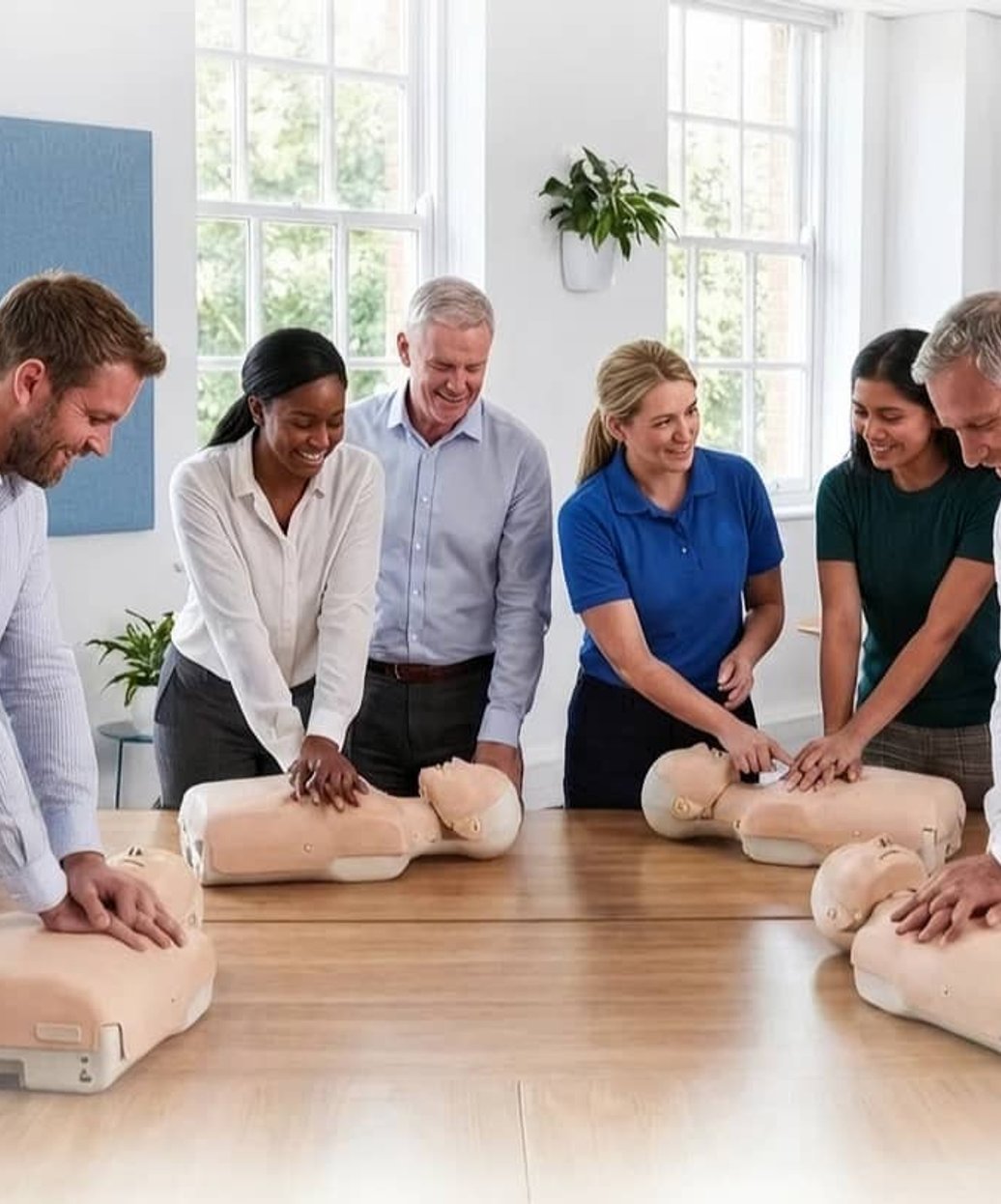
We cap enrollment so the class stays a class. Correct instructor-to-student ratios are not a marketing line for us; they are the difference between practicing high-quality compressions with coaching and watching someone else practice them. Every student gets hands-on time with the manikin, the bag-valve mask and the AED trainer.
Honest Skills Practice
Compression depth and rate are measured, not assumed. Two-rescuer sequences are run as two-rescuer sequences. Airway management is practiced until it looks like something you could repeat under stress. If a skill is not right yet, we coach it until it is — that is what the time is for.
Advanced Provider Courses
BLS is the floor, not the ceiling. For clinicians who run or take part in the resuscitation itself, we teach the American Heart Association's advanced provider courses alongside it, so one provider covers the whole stack of cards your department needs.
ACLS — Advanced Cardiovascular Life Support
The AHA's ACLS course gives healthcare providers the clinical tools and the confidence to manage adult cardiovascular emergencies: recognizing and responding to cardiac arrest, stroke and acute coronary syndromes, delivering high-quality compressions and airway support as part of a coordinated team, interpreting ECG rhythms, administering medications during life-threatening events, and taking command in simulated MegaCode scenarios. It runs as a traditional instructor-led classroom or as a blended classroom — online learning first, then an in-person skills session. Completion earns a two-year ACLS Provider certification. It is intended for healthcare professionals who direct or participate in the management of cardiopulmonary arrest or cardiovascular emergencies: hospital staff, EMS personnel and critical care providers.
PALS — Pediatric Advanced Life Support
The AHA's PALS course is built for medical professionals who provide emergency care to infants and children in high-acuity settings — emergency departments, ICUs and critical care units. It covers rapid assessment and management of respiratory emergencies, shock and cardiac arrest in pediatric patients, high-quality pediatric CPR and defibrillation, advanced airway techniques specific to infants and children, and functioning as a team member or team leader during simulated pediatric emergencies. Students complete cognitive learning and a skills assessment, in person or blended, and receive a two-year AHA certification. Pediatricians, emergency personnel, nurses and paramedics make up most of the room.
ASLS — Advanced Stroke Life Support
The AHA's ASLS course, developed in partnership with the University of Miami's Gordon Center, prepares clinicians to identify and manage acute stroke in pre-hospital and hospital settings. It covers early recognition of stroke syndromes and rapid triage, neurological assessment including the Miami Emergency Neurological Deficit (MEND) exam, time-sensitive treatment goals for ischemic and hemorrhagic strokes, and post-stroke stabilization and transfer protocols. The format is two-part: a self-paced online module followed by a required in-person skills session. Completion earns a two-year AHA ASLS certification. The course meets continuing education and stroke center certification requirements, which makes it a fit for EMS providers, emergency nurses and hospital stroke teams — and it is one we bring on-site throughout New England.
Not sure whether your role qualifies, or whether your facility accepts an AHA card for these? Check with your employer or credentialing body first, then call us — we would rather sort that out before you register than after.
On-Site BLS for Your Organization
We run public BLS classes from our Woburn location and we travel throughout New England for private, contracted training. On-site delivery is often the cheaper and far less disruptive option once you account for staff travel time.
- Hospitals and health systems — unit-based sessions scheduled around shift changes
- Dental and medical practices — the whole team certified in one visit, in your own operatory or break room
- EMS organizations — crew renewals run at your station
- Nursing and allied-health programs — cohort certification timed to placement deadlines
eCards, Rosters and Certification Management
Online registration and eCard delivery are available for most courses. For organizations, we handle roster management and certification records so your compliance file is complete without someone in HR chasing individual students for screenshots. One point of contact, one roster, one finished record. Specific certification details are confirmed at registration.
Group Rates and Annual Training Plans
Group, corporate and recurring-training discounts are available. For clients who certify staff every year — hospitals, dental groups, camps, schools and aquatic facilities — we build custom annual training plans so renewals stop being an emergency and start being a calendar entry.
If Your Plans Change
Need to change your date? Transfers requested more than 24 hours before class are available for a $50 fee, subject to availability. Aquatics courses follow a separate refund schedule. See our Terms.
BLS and Advanced Course Questions
Do you offer Red Cross or AHA BLS?
Both. We offer American Red Cross Basic Life Support as a Red Cross Premier Licensed Training Provider and AHA BLS for Healthcare Providers as an American Heart Association Training Site. Tell us which card your employer or clinical placement requires and we will run that course.
Do I need BLS or a regular CPR course?
BLS is a healthcare-provider level course for nurses, dental teams, EMS and allied-health students. If you are unsure which one you need, call us at (617) 820-9862 and we will sort it out before you register.
Can ACLS, PALS and ASLS be taken in a blended format?
Yes. ACLS runs as a traditional instructor-led classroom or as a blended classroom, with online learning first and then an in-person skills session. PALS is offered in person or blended. ASLS is a self-paced online module followed by a required in-person skills session.
How long are ACLS, PALS and ASLS certifications valid?
Each one earns a two-year AHA certification.
Can you run BLS at our hospital, practice or station?
Yes. We run public BLS classes from our Woburn location and travel throughout New England for private, contracted training, from unit-based sessions scheduled around shift changes to crew renewals at your station.
Why Wicked Safety Training
We have been teaching life-safety courses across Greater Boston and the North Shore since 2019, backed by over 100 years of combined staff experience. Our founder brings more than a decade of hands-on life-safety teaching experience to how every class is built and staffed.
Ready to book? Call (617) 820-9862, email info@wickedsafetytraining.org, or send us the date and headcount and we will come back with options.
Register for BLS